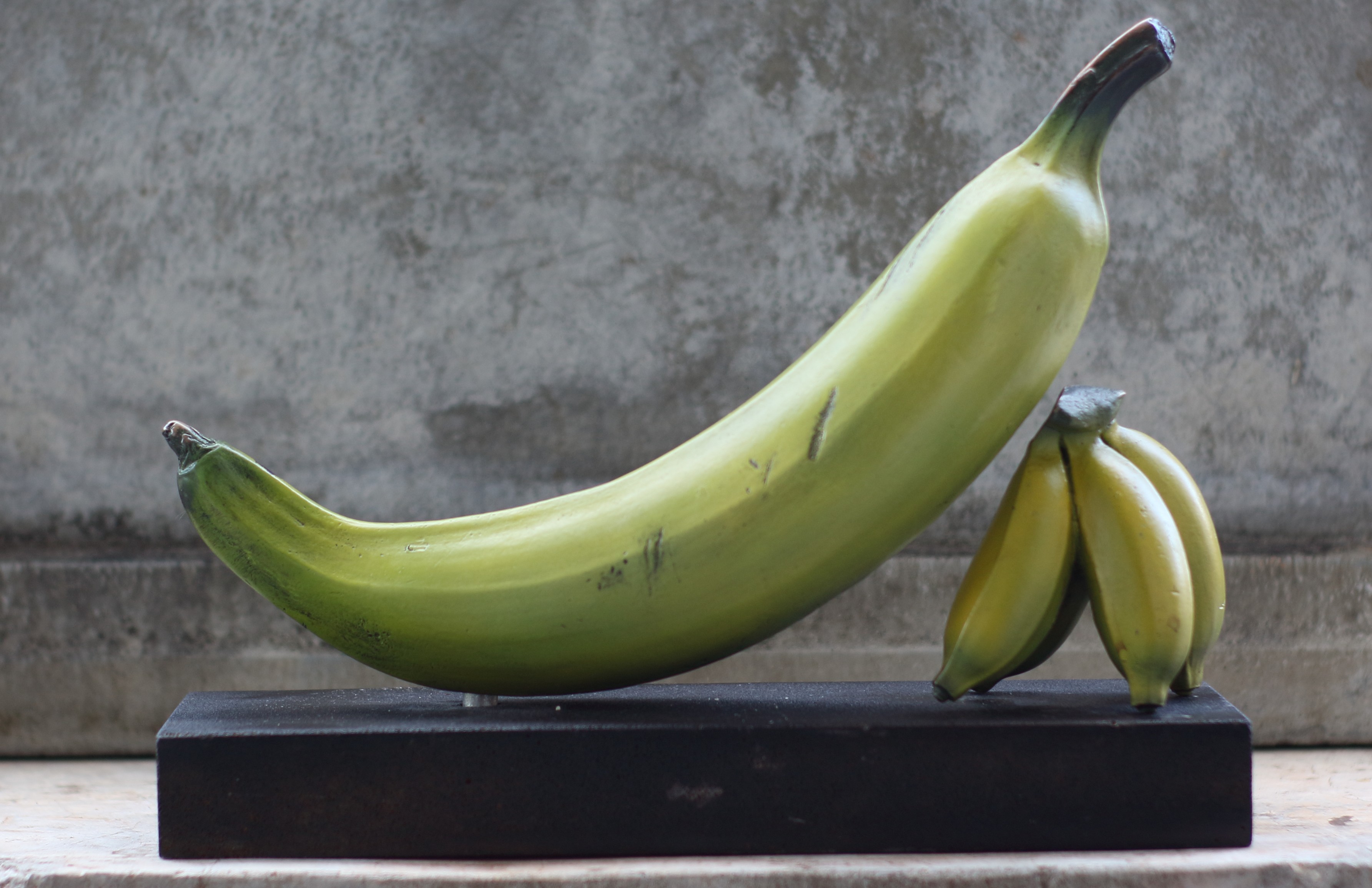
Tindok & Lady Finger Banana · Cebu, Philippines · Pandemic Years Cast directly into silicon bronze. Founding specimens of the Philippine Bronze Herbarium.
For thirty years, one foundry has been doing something that has no category. Not casting in the traditional sense. Not modelling, not interpreting, not reproducing. The living specimen enters the process. What emerges is the specimen — its turgor, its scars, its particular history of wind and light — translated without loss into silicon bronze at sub-micron fidelity.
We call the results transmutates. The practitioner is not a sculptor. The practitioner is an archivist and an engineer. The philosophy is capture — not interpretation. The object as archive.
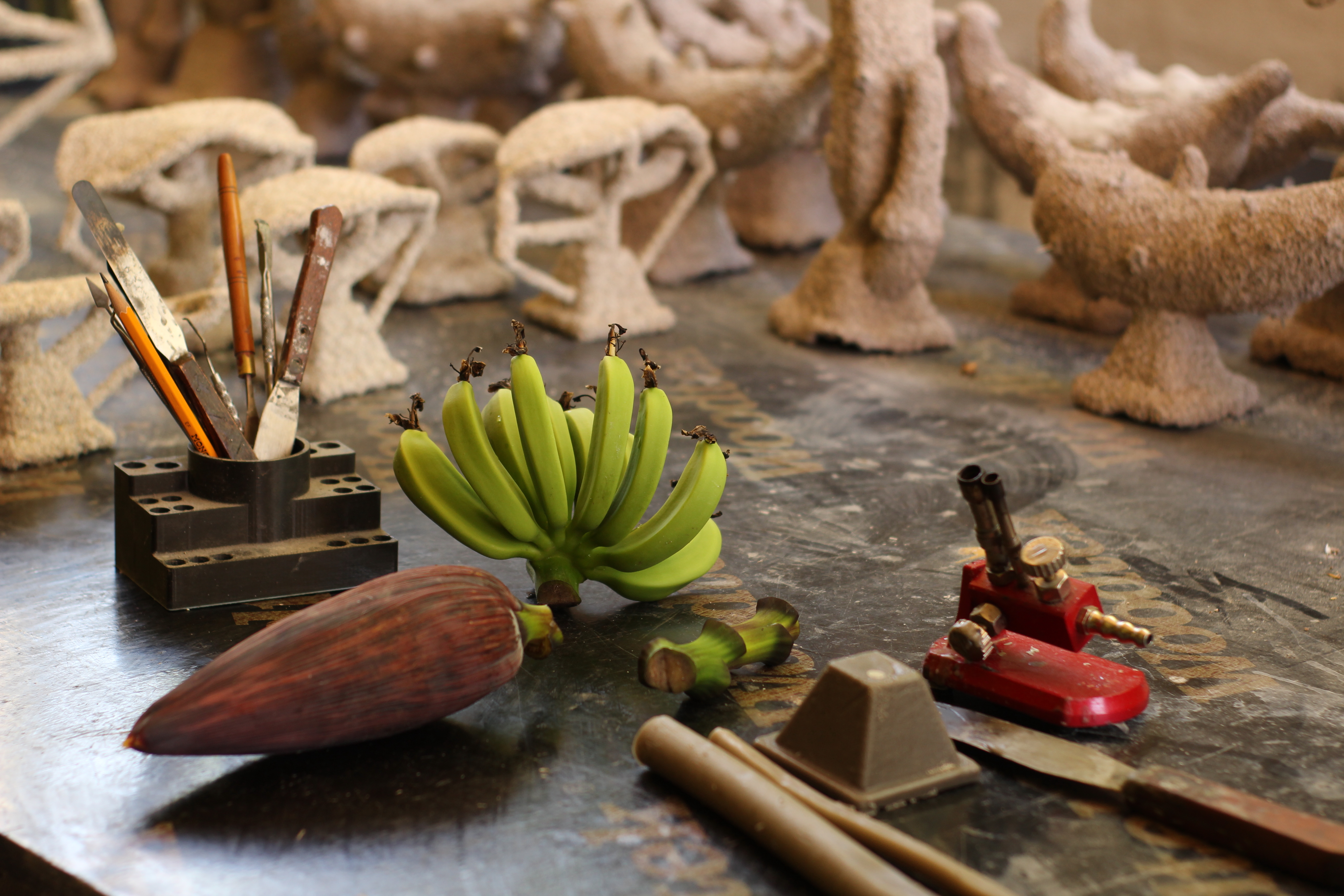
Plate I · Botanicals of Influence Since the dawn of the hominid lineage, we have coevolved with the plant kingdom. The BLI was founded to document this dialogue — not in fading ink, but in the permanent language of metallurgy.
The apple did not evolve sweetness for its own pleasure. It evolved it for ours. This is not poetry — it is the record of a negotiation older than language, written in chemistry, and answered in the movement of human hands across continents.
We did not discover these plants. We were summoned by them.
The alkaloids that move through cacao, tobacco, nutmeg, and chile do not merely affect us — they speak to us in a language our biology already knows. Theobromine finds its receptor. Capsaicin finds its channel. Myristicin finds its pathway. These are not accidents of chemistry. They are the evidence of a dialogue running for millions of years — the plant learning our biology, and we learning to follow the plant across every ocean and mountain range on earth.
The Biomorphic Legacy Initiative was founded to preserve the physical form of the species at the centre of this conversation — not in fading ink, not in a digital file, but in the permanent language of metallurgy. The specific morphology of the varieties that have shaped our civilisations, incited our conflicts, and fed our hungers, locked into silicon bronze at the scale of the living object.
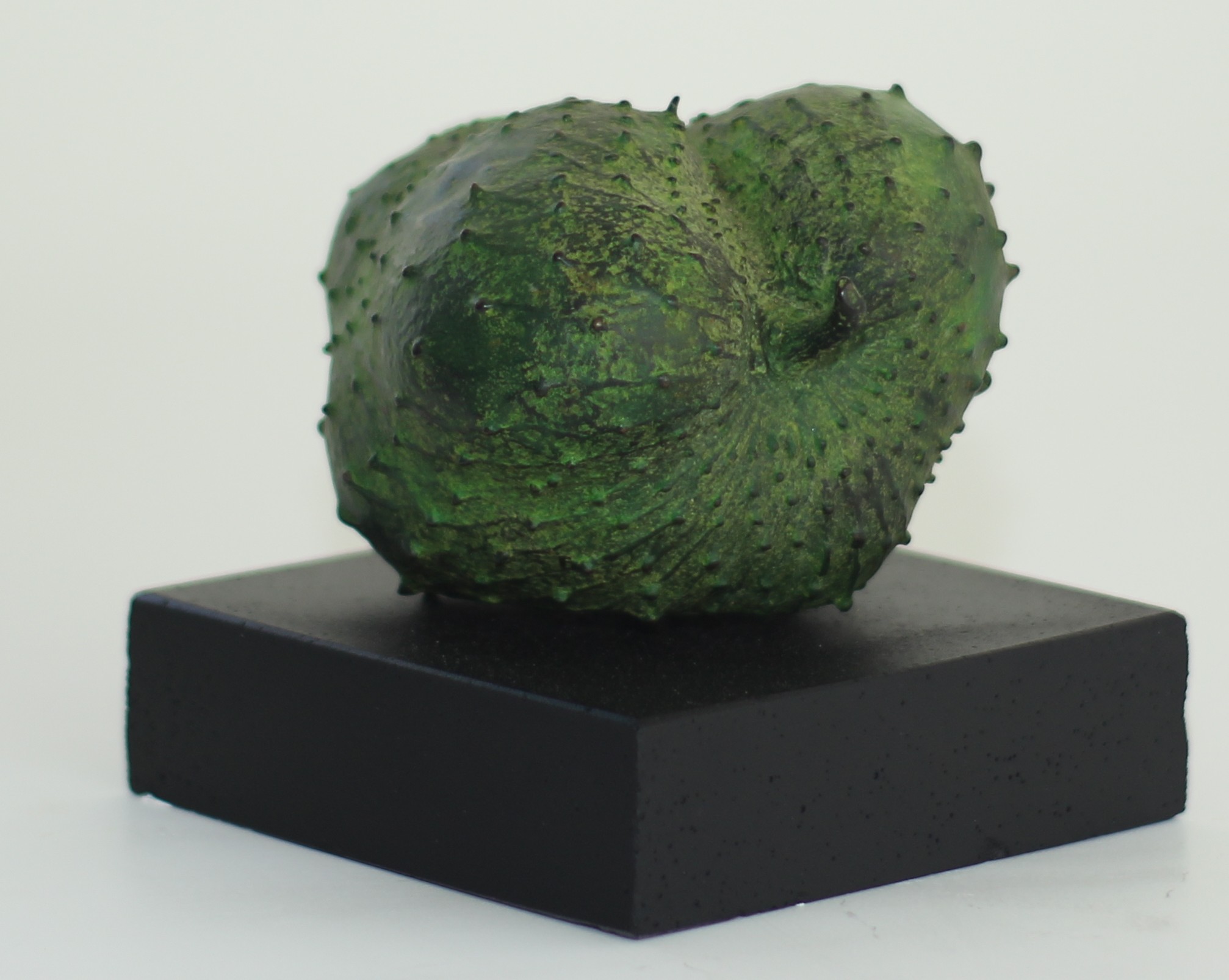
Plate II · Guyabano · Annona muricata · Philippines Silicon bronze. Coloured with cupric nitrate for the deep verdigris, finished with a dilute ferrous sulphate wash drawing shadow into the spine recesses. Every lobe, every commensal scar preserved at 1:1 scale. Reactive Patinas™ applied not decoratively — but as chromatic restitution. The plant that summoned us, archived in the metal we summoned from the earth.
We are not making copies; we are facilitating the direct transmutation of biology into history.
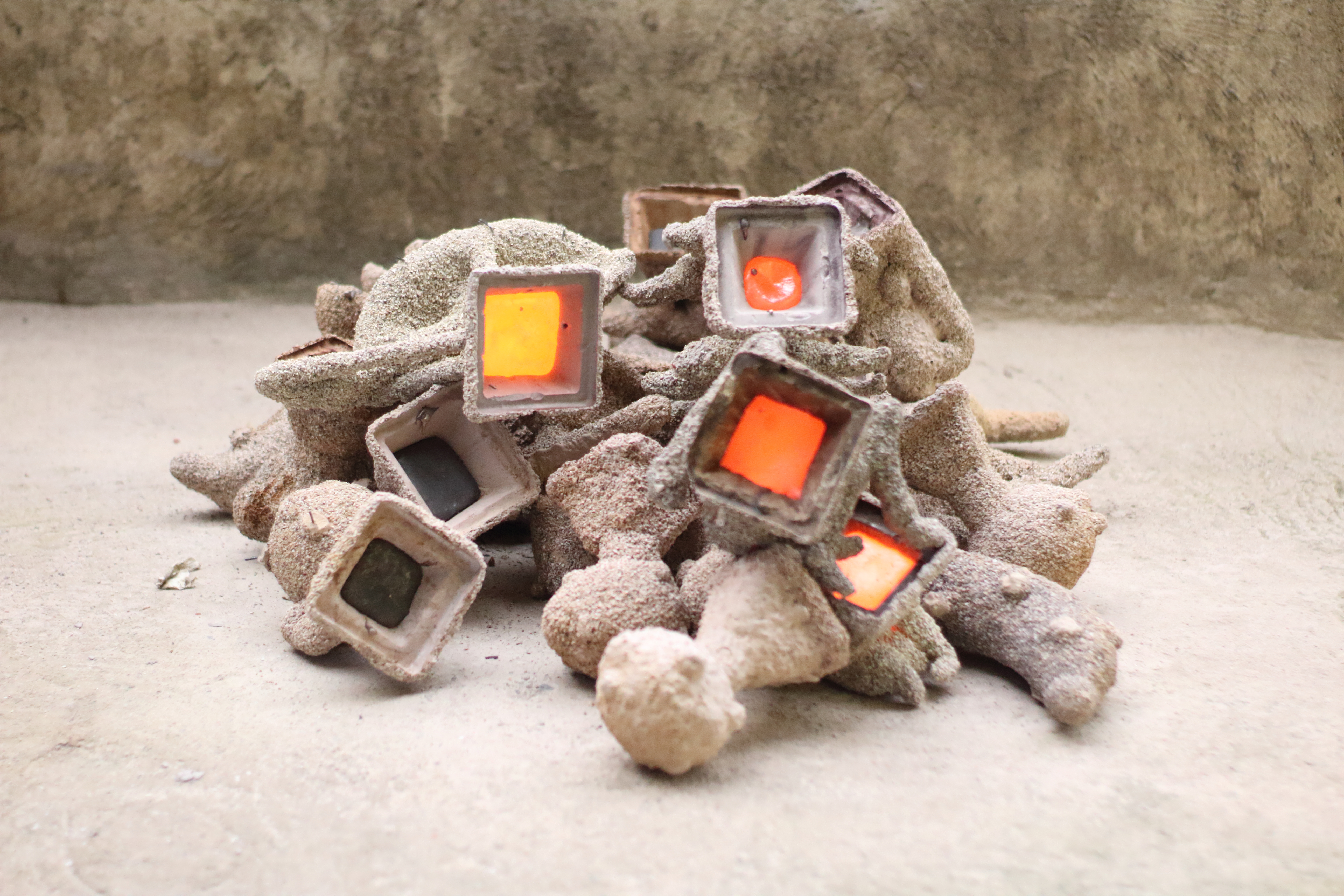
— Botanical Bronze · Founding PrincipleThe process begins with complete vaporisation of the organic specimen. Unlike traditional casting, no mould is used. The actual botanical specimen is encased in a ceramic shell and exposed to temperatures up to 1000°C. This high-heat treatment removes all organic matter, leaving a white-clean ceramic negative — a perfect forensic record of the biological signature.
Plate II · The Double-Burnout Protocol The glowing ceramic shell at 1000°C. Every oil gland, every scar, every whisper of turgor is encoded in the negative before the bronze enters.
The specimen is vaporised completely — leaving a white-clean ceramic negative of absolute fidelity. No mould distortion. No shrinkage. The ceramic carries the specimen's form at the molecular boundary of the original surface.
A specialised wax is introduced to the cavity, forming a hollow core. This establishes the structural architecture of the final casting — thin-section bronze walls that carry the original dimensions and the natural firmness, the turgor, of the living specimen.
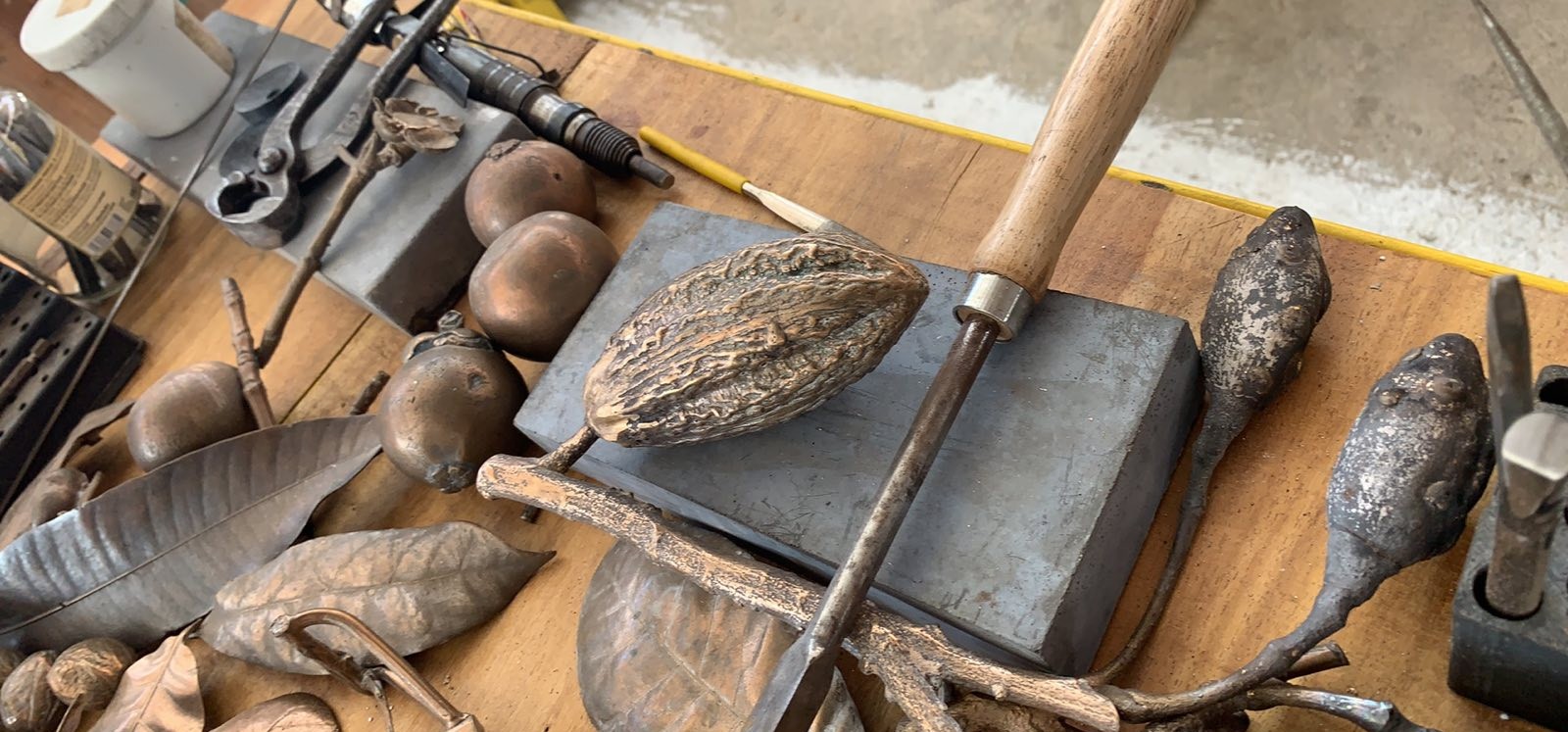
Silicon bronze is poured into the prepared ceramic negative. The result is a hollow, stable bronze surrogate that faithfully maintains the living characteristics of the original. Turgor preserved. Commensal scarring preserved. Sub-micron surface fidelity achieved.
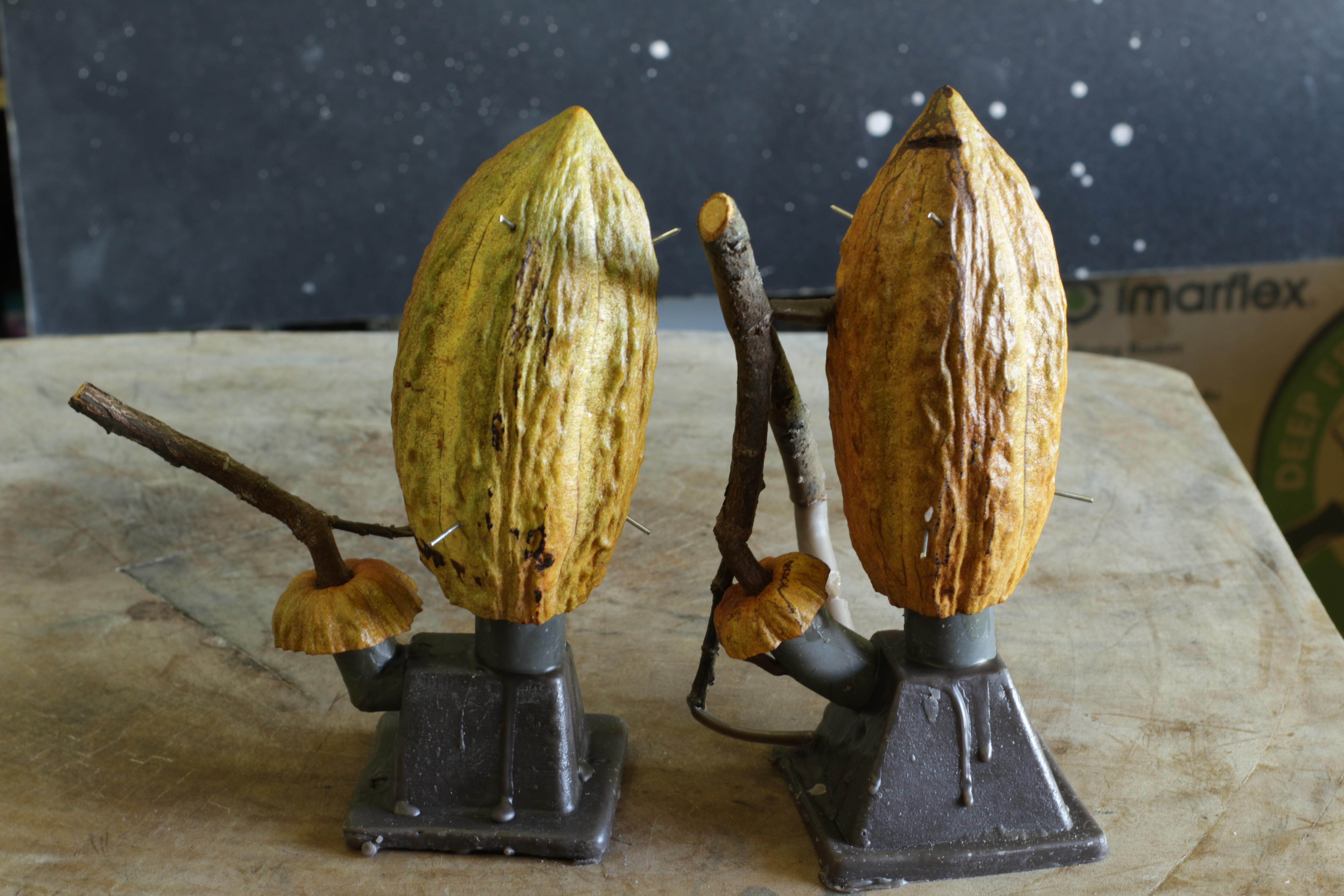
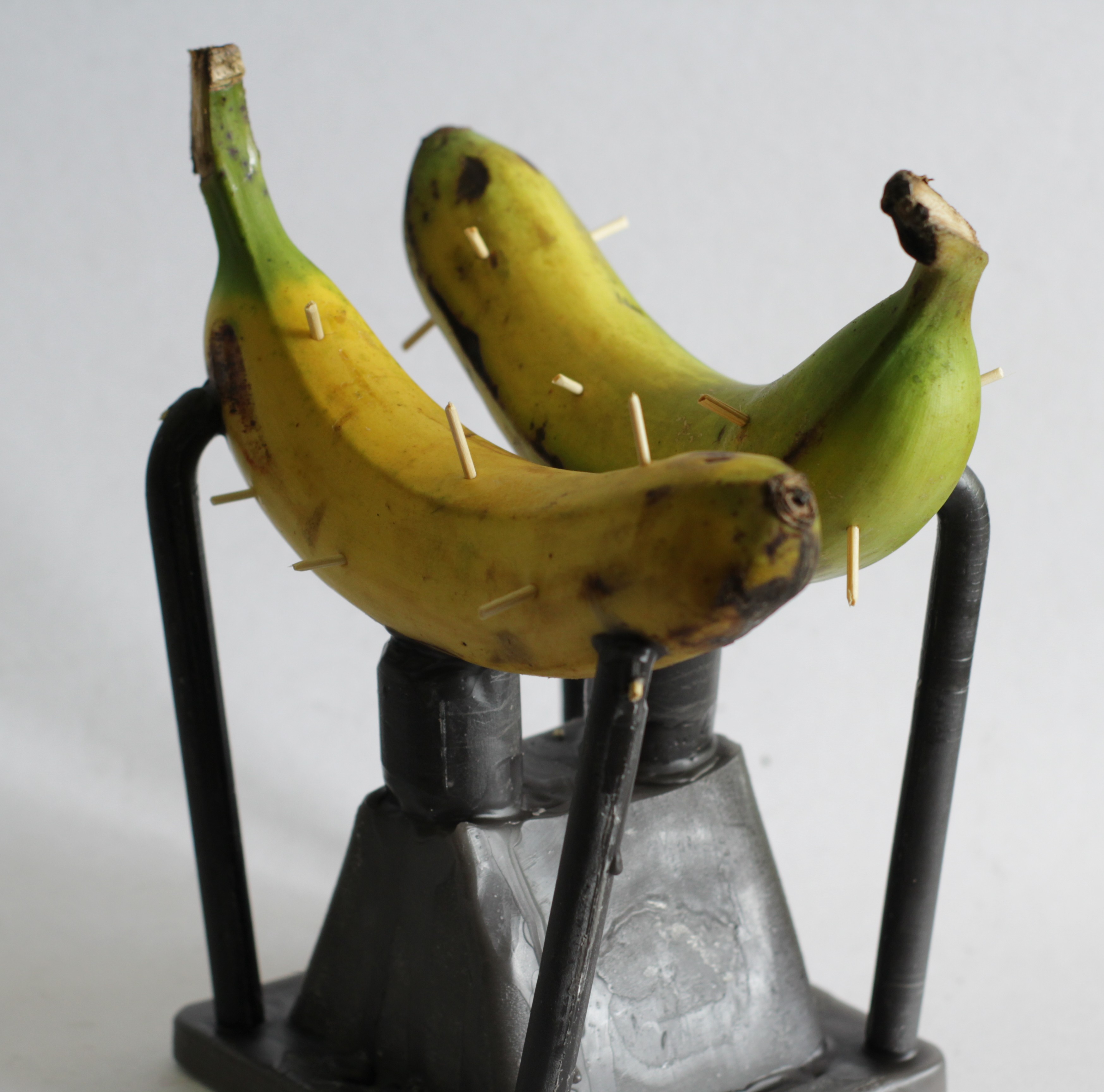
During primary burnout, the specimen is held in spatial registration by toothpicks — temporary pins that orient the form within the ceramic shell. At 1000°C they burn away with the organic matter, leaving clean channels through the ceramic wall. After wax-slush coring establishes the hollow void, the thin ceramic cap over each channel is snapped away. Stainless core pins are then inserted through these clean apertures directly into the wax — locking the core in fixed position before secondary burnout. The pins cannot be placed earlier: wax would encapsulate them, leaving the core free to shift after the second burn, destroying dimensional accuracy.
The elegance of this solution becomes fully apparent only when casting a durian — where mass, irregular geometry, and multiple cavity zones demand independent core registration at every spike. The protocol holds because the answer was found there, not on a drawing board.
Currently, the study of high-value or endangered botanicals is restricted by rigid phytosanitary barriers. Species such as Cacao, Musa, and Citrus are routinely barred from crossing state or national borders due to the risk of transporting invasive pathogens. This biosecurity wall limits the reach of university research, museum accessibility, and public education — effectively keeping the world's most influential plants behind locked laboratory doors.
Because the Double-Burnout Protocol utilises temperatures of 1020°C, every trace of biological material — bacteria, fungi, insect larvae — is completely vaporised. The resulting silicon bronze surrogate is an inert, inorganic record that carries 1:1 forensic data without any biological risk.
BLI bronzes do not require the restrictive Live Specimen permits typically mandated by the USDA or international customs. A specimen from a tropical field node travels directly to a fixed foundry hub at a northern university or national museum — without quarantine. The Ghost can travel where the biology cannot.
Plate III · The Biosecurity Bridge The inert metallurgical surrogate crosses borders freely. Sterile by process. Certified by science.
Plate IV · The Mobile Field Node In-situ forensic capture within one hour of pruning. The wax signal preserves turgor before cellular collapse.
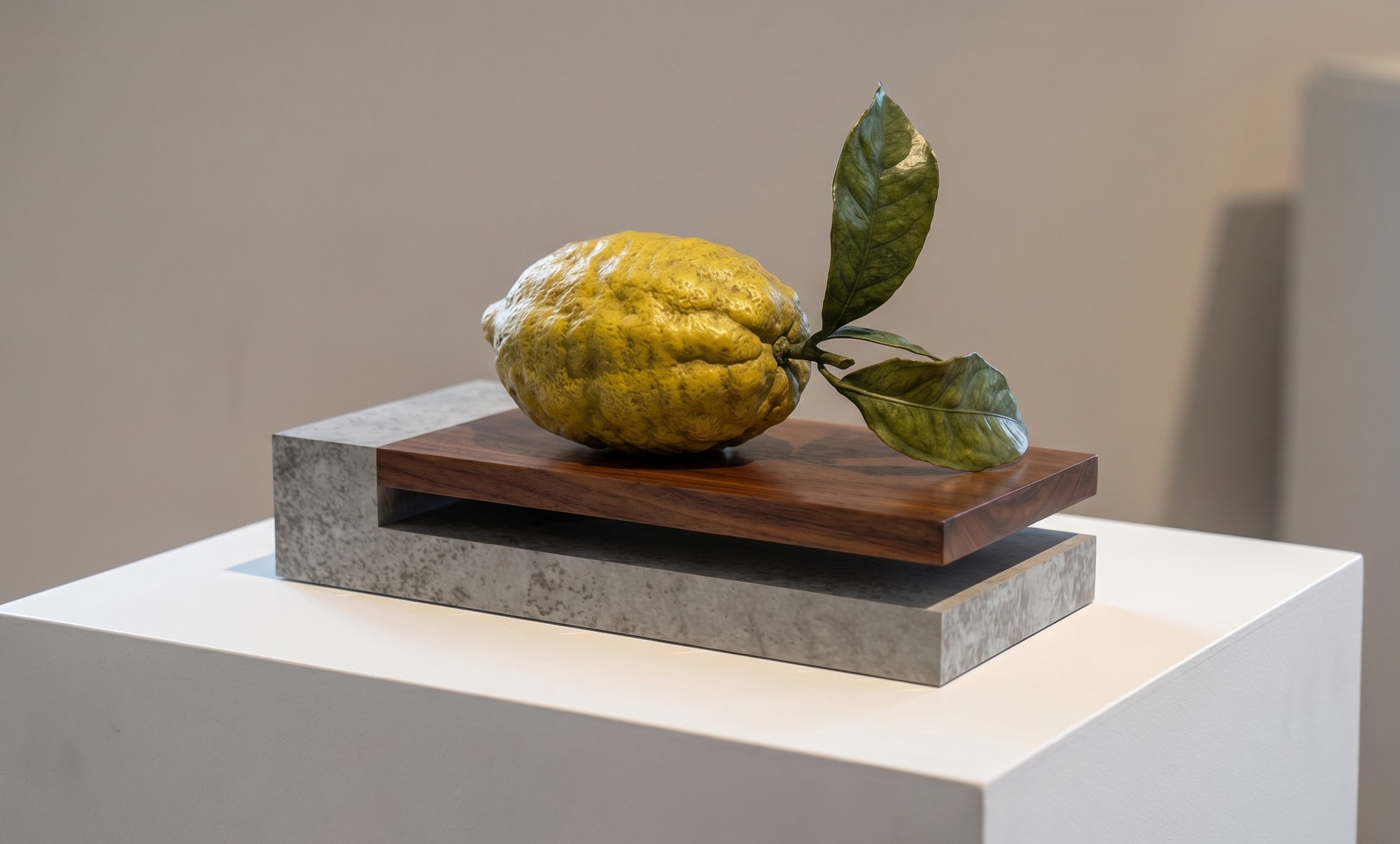
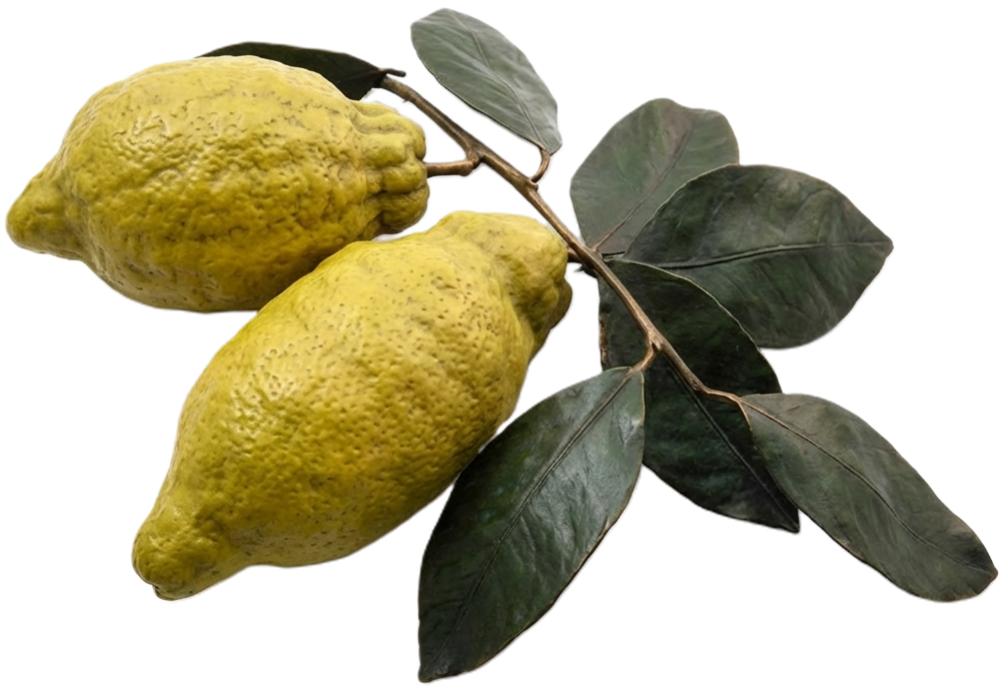
The first expedition of the Biomorphic Legacy Initiative travels to the precipitous terraces of the Amalfi Coast — source of the Sfusato Amalfitano, a cultivar of exceptional rarity cultivated there for over a thousand years. Elongated, ribbed, thick-rinded: a fruit shaped entirely by place. The salt off the Tyrrhenian. The altitude. The limestone. It cannot be grown meaningfully elsewhere.
This casting preserves a specific specimen — not a composite, not a type-form. One fruit. Its particular weight distribution. The asymmetry of its growth. The commensal scarring left by its own history of wind and rain. These details, invisible in photographs, are present in bronze at 1:1 scale.
Plate V · Sfusato Amalfitano Silicon bronze, reactive patina. Presented on cement and fruitwood plinth — itself a botanical object — with numbered archival certificate of provenance.
Plate VI · The Living Source Harvested at altitude on the Amalfi Coast. Every scar, every oil gland, every whisper of turgor — locked into silicon bronze at sub-micron fidelity.
Founding patron presales — 50 numbered places — are the launch trigger for Expedition I. Each chapter funds the next.
The discipline began with a strawberry. The attempt to mould it destroyed it — the mould collapsed the turgor, erased the surface, returned a generalisation. The No-Mould Condition was the founding constraint: if the object cannot survive the process, the process is wrong. Everything that followed was the answer to that problem.
A woman in a Melbourne market selling walnuts. The way she held them. The way the walnuts held thirty years of a particular orchard. That encounter established the second principle: the object carries history that the photograph cannot. The haptic record is the only complete record.
Fifty bronze lemons. Sold to an antique dealer who called them alchemical. At AUD $1,000 each. The market existed before the market was named. Graham Geddes validated what the discipline already knew: that the transmutate occupies a category of its own, between art object and scientific instrument.
The armillary sphere sundial commission, 1991. A sold-out solo exhibition. The institutional relationship that established Botanical Bronze as a practice with archival legitimacy — not decorative, not illustrative, but documentary. The botanical garden as the natural home of the transmutate.
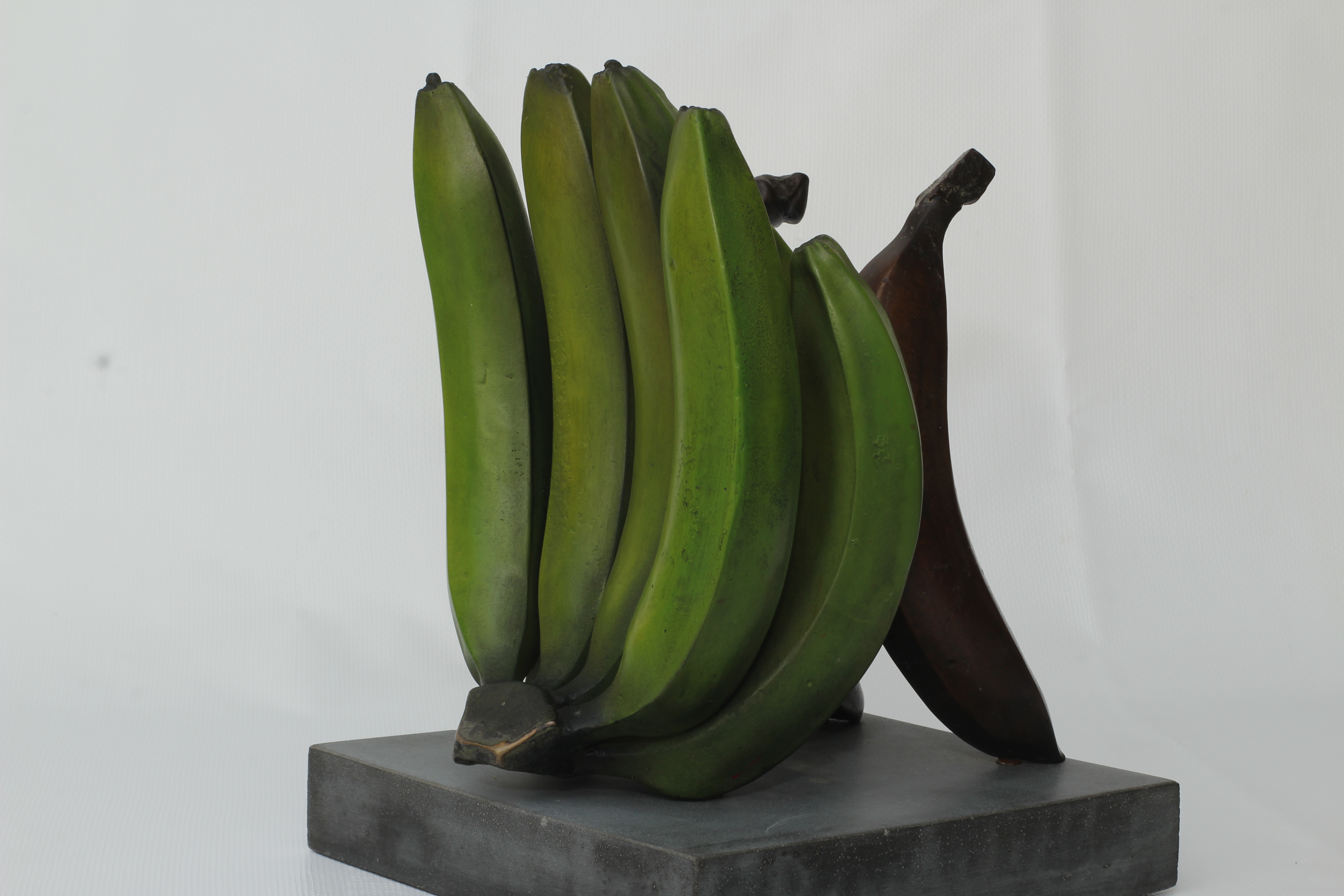
The foundry reopened in Cebu during the pandemic. The founding specimen of the Philippine Bronze Herbarium was the Tindok banana. In stillness, the work clarified: the Biomorphic Legacy Initiative was not a local practice. It was a global methodology waiting for its expeditions. The programme took its present form here.
We would rather speak with you directly.
Choose the channel that suits you. Every enquiry reaches the foundry directly — no intermediary, no delay.
In the Philippines, botanical heritage lives in food, ritual, medicine, and memory. Yet the forms themselves — pods, seeds, husks, fallen fragments — vanish silently each season. Banana cultivars are among the most culturally and biologically significant plants in the region, yet their physical presence is brief. Seasonality, geography, and rapid decay make it impossible to encounter breadth and variation in a single place.
The Philippine Musa Metallarium resolves this through direct metallurgical preservation. A curated set of biomorphic transmutates — haptic archive units preserving cultivar form in inert metal, selected under the Species of Influence lens and documented as legal travelers for exhibition and study. Sixty distinct Musa cultivars. Cast in modular hands of four. Each unit a stand-alone haptic archive object — handleable, exhibitable, and accessionable independently.
This is not a collection of bananas. It is the assembled breadth of a genus — the dispersed, short-lived forms of an archipelago gathered into one permanent library.
Plate IX · Pre-Transmutation · The Registration Moment Three Musa cultivars held in spatial registration by toothpick pins before ceramic encapsulation. The pins are sacrificial — they burn away at 1000°C, leaving clean channels for core registration. The brief life of fruit, gathered before it vanishes.
Plate X · The Transmutate · Philippine Bronze Herbarium Silicon bronze, reactive chromatic restitution. Colour is not applied — it is returned, guided by the original biological record documented before encapsulation. The bronze records form. The colour returns the life signal.
The Philippine Musa Metallarium has been conceived deliberately as a finite, single-patron initiative. Its objective is not scale, replication, or commercial expansion — but the careful realisation of a complete and coherent botanical archive that cannot be assembled through conventional collecting or institutional channels.
One founding patron will name the collection and be credited permanently across the archive, exhibition materials, and publication artifact. The project office and studio can be established in Manila, allowing for transparency, access, and direct engagement throughout the life of the work.
After completion, the Founding Collection may be offered for exhibition loan, educational programming, or custodianship discussions with appropriate institutions. This is a privately funded, publicly documented cultural archive — built to strengthen institutional visibility, not compete with it.
These objects are best understood through direct handling — their weight, surface, and fidelity are central to the intent of the project.
— Private Correspondence · Philippine Musa Metallarium